

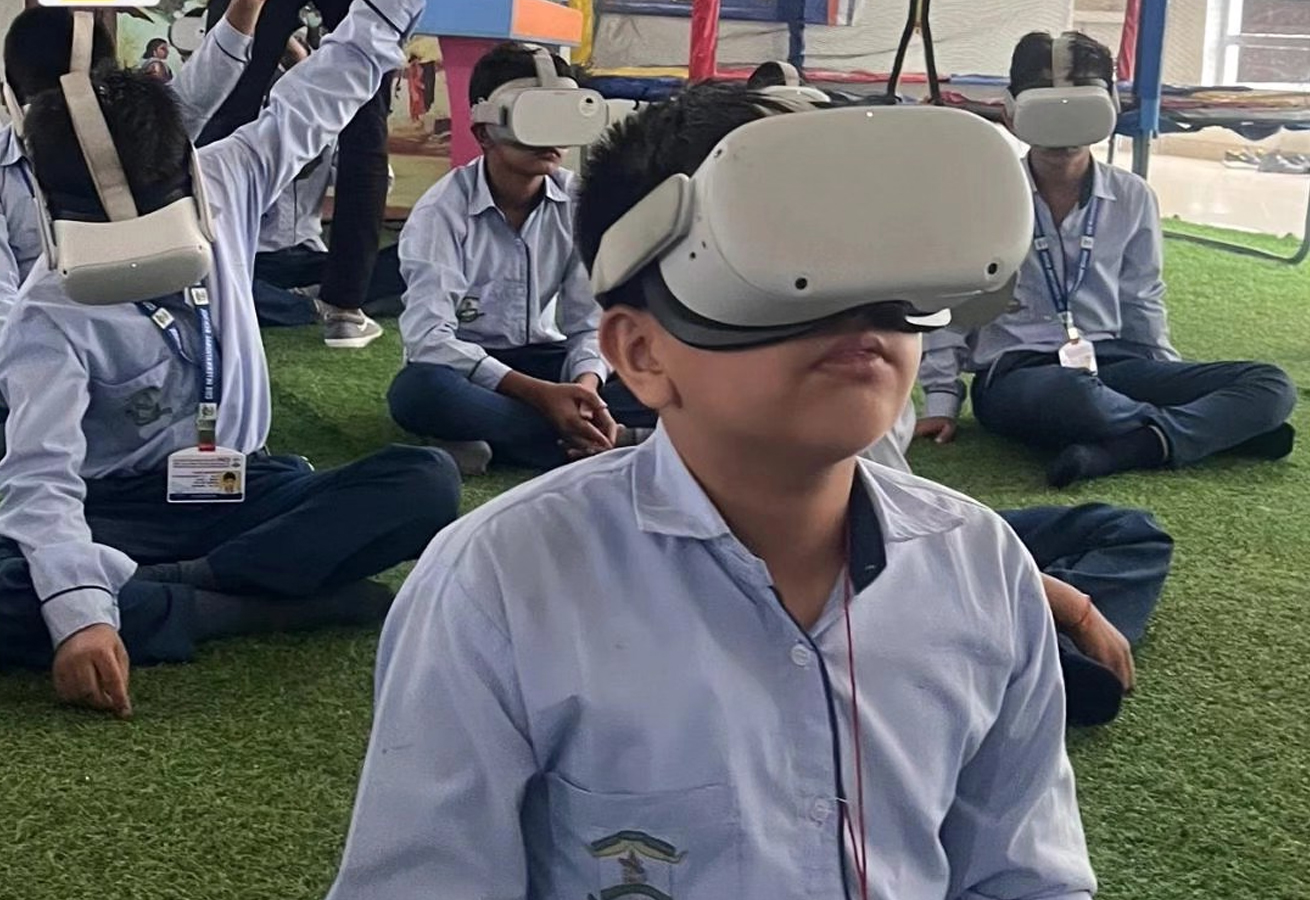
- Hands-on learning
- Skill development
- Bright school-ready setup
What Kaushal Bodh means for your school
Kaushal Bodh brings vocational education into the middle years in a practical and student-friendly way. It helps schools move beyond theory-only learning and create meaningful hands-on experiences for Grades 6-8.
From school learning to real skill-building
- It is designed for students in Grades 6 to 8.
- It helps children learn by doing, not only by reading.
- Students work on practical projects related to life forms, making, and human services.
- The goal is to build confidence, responsibility, creativity, and real-life skills.
The three official Kaushal Bodh work domains
Kaushal Bodh is built around three broad forms of work. A strong school setup should help students explore all three in a simple, balanced, and engaging way.
One framework, three ways of learning
- Gardening and composting
- Biodiversity observation
- Sustainable agriculture exposure
- Toys and prototypes from simple materials
- Coding, digital creation, and AI exposure
- Tool handling and structured making
- Cooking, health, and hygiene basics
- Museum, heritage, and storytelling projects
- Community-minded service learning
How Kaushal Bodh grows from Grade 6 to Grade 8
The learning journey is progressive. Students move from guided introduction to stronger application and then toward more advanced, technology-supported practical work.
- Kitchen garden
- Biodiversity register
- Maker skills
- Cooking without fire
- Plant nursery
- Habitat garden
- Puppet storytelling
- Family health handbook
- Hydroponics
- Animal care basics
- Water audit
- Creating advertisements
What a strong
Kaushal Bodh Lab
should include
Kaushal Bodh is not a single-subject room. It works best as a flexible, modular setup where schools can support gardening, making, digital work, presentation, health, and service-oriented projects within one clear system.
Designed for real schools, not just good-looking concepts
A meaningful Kaushal Bodh page should not stop at philosophy. It should also explain the practical requirements behind safe, understandable, and curriculum-linked school delivery.
Built around the official direction behind Kaushal Bodh
Our Kaushal Bodh Lab approach is shaped by the larger direction of NEP 2020, NCF-SE 2023, NCERT activity books, and the evolving CBSE skill education framework for middle-stage learners.
What schools gain from a well-planned Kaushal Bodh Lab
We don't just drop off equipment. We empower your teachers.
Providing the right tools is only half the solution. We ensure your staff is fully trained and supported year-round to deliver the Kaushal Bodh curriculum with confidence.
Flexible packages for every school size and stage
Whether you need basic guidance or a complete turnkey setup, we have a model that fits your school’s vision and budget.
Beyond the classroom: How Kaushal Bodh benefits the entire school
Common questions from
schools and parents
Kaushal Bodh is the vocational education program for middle-stage learners in Grades 6-8. It gives students structured exposure to practical work, projects, life skills, and real-world applications.
Yes. Kaushal Bodh is aligned with NEP 2020, NCF-SE 2023, NCERT activity books, and the broader CBSE skill education direction for middle school vocational learning.
A strong Kaushal Bodh Lab should include green-skill materials, maker tools, safe storage, digital access, human-services activity resources, and a layout that supports project-based learning across Grades 6-8.
A normal science lab usually focuses on subject experiments. Kaushal Bodh is broader. It combines life forms, machines and materials, and human services to build work habits, problem-solving, creativity, and practical life readiness.
Yes. The curriculum is practical by design. Schools can adapt project choice and setup according to local context, student strength, available space, and resources while staying aligned with the curriculum intent.
Kaushal Bodh is meant for middle-stage students, especially Grades 6, 7, and 8. The learning becomes more advanced as students move from one grade to the next.
Students usually work on multiple practical projects across the school year. A common structure is one project from each major work area so that learning stays balanced and hands-on.
The three main work areas are Work with Life Forms, Work with Machines and Materials, and Work in Human Services. These together give students a broad vocational learning experience.
This area can include projects such as kitchen gardens, biodiversity work, plant nurseries, hydroponics, and other activities connected to plants, nature, and environmental care.
This area can include maker skills, model building, safe tool use, coding, simple automation, and other projects that help students understand materials, making, and technology.
This area can include cooking without fire, health and hygiene work, storytelling, museum or heritage projects, family health documentation, and community-focused service learning.
A Kaushal Bodh Lab helps schools run the curriculum in a more organized way. It gives students the space, tools, and materials they need for real activity-based learning.
No. It is not only about future jobs. It also helps students develop confidence, teamwork, observation, communication, creativity, and practical life skills that are useful in everyday life.
Yes. Kaushal Bodh fits very well with NEP 2020 because it promotes experiential learning, multidisciplinary thinking, practical skills, and stronger connections between school and real life.
Safety should be built into the setup through supervised activities, age-appropriate tools, clear storage, basic safety gear, and simple instructions that students can follow comfortably.
Not always. A school can begin with a practical and flexible setup. The important thing is to organize the space well so students can work safely and move between activities easily.
Yes, if the lab is planned well. Clear zoning, accessible storage, simple materials, and an easy activity flow make it much easier for teachers to conduct sessions confidently.
Yes. Depending on the grade and project, students may engage with coding, simple digital tools, presentation work, media creation, and basic technology-supported practical tasks.
Common materials can include gardening tools, composting items, seed trays, paper and craft supplies, safe hand tools, simple digital devices, hygiene materials, and project storage resources.
Organic IQ helps schools plan the Kaushal Bodh Lab layout, identify suitable learning zones, choose practical materials, and shape a setup that is safe, useful, and aligned with school needs.